
Research in every heartbeat
When Beating Hearts Malta was founded in 2011, its purpose was clear: to support parents and families navigating the complex and emotionally demanding world of congenital heart defects (CHD).
What began as a platform for sharing experiences and practical advice has now evolved into a national force behind cardiovascular research. The organisation’s €60,000 donation to the University of Malta’s Research, Innovation and Development Trust (RIDT) signals a major step forward in that transformation.
Dr Maryanne Caruana, consultant cardiologist at Mater Dei Hospital and current President of Beating Hearts Malta and Coordinator Katrina Aquilina, whose second child was born with a major heart defect, explained that BHM started off as a support group for patients with congenital heart disease and their families
Over time, as its visibility and donations increased, BHM started to diversify its work while always keeping patients with congenital and other forms of heart disease at the heart of its initiatives.
The organisation’s recent financial support to RIDT – €30,000 each for two innovative cardiovascular research projects – underscores this commitment to a future built on evidence-based care.
“Research is the behind-the-scenes of the treatment and interventions we offer to patients living with congenital heart disease and any other medical condition,” they explained. “In supporting research for heart disease, Beating Hearts Malta has been helping in furthering the knowledge on heart conditions and improving the quality of the treatment our patients can receive.”
One of the projects funded through RIDT, led by Dr Vanessa Petroni Magri from the Department of Clinical Pharmacology and Therapeutics, aims to address an increasingly urgent problem in modern medicine: cardiotoxicity caused by cancer treatments. The research will test novel chemotherapeutic agents on laboratory-grown heart models to better understand how to target cancer cells without damaging cardiac tissue.
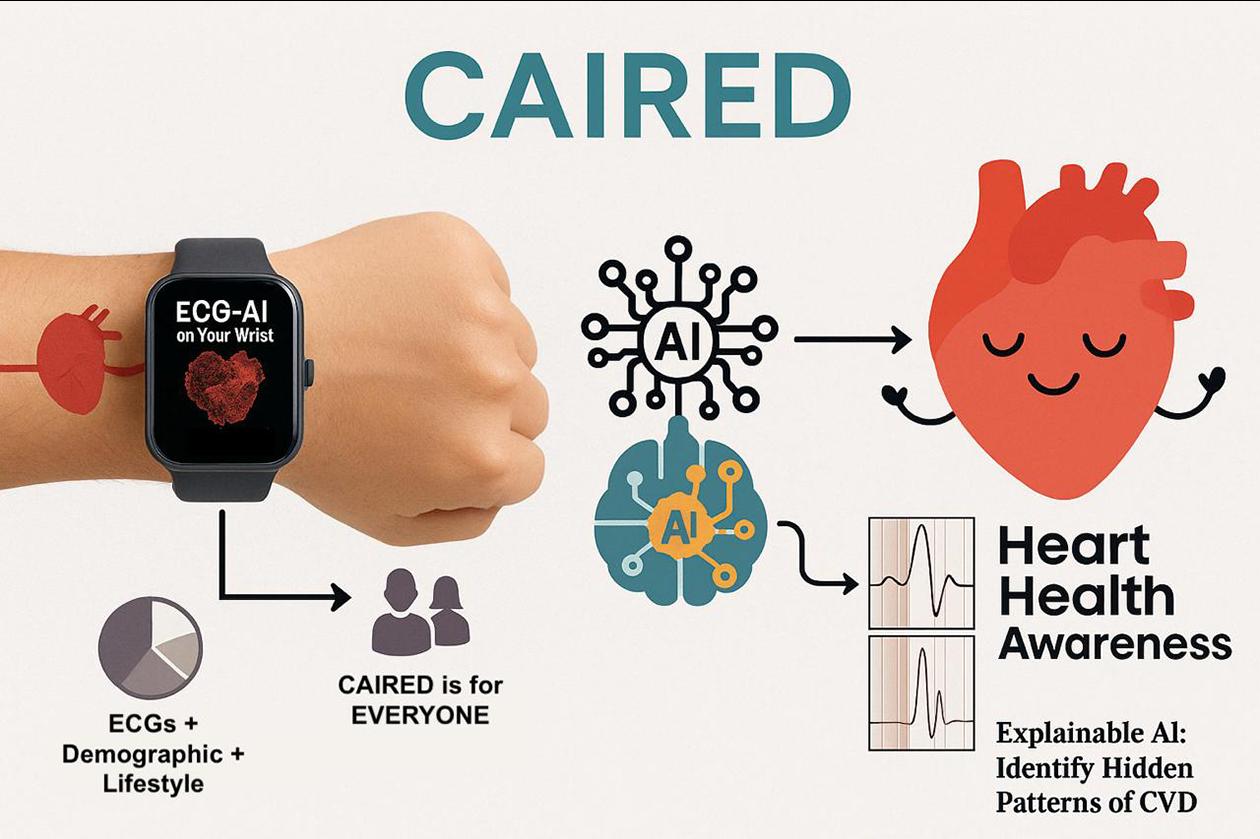
The second project – CAIRED (Cardiovascular Artificial Intelligence: e-Health for Diabetes) – spearheaded by Dr Kenneth Scerri from the Department of Systems and Control Engineering, leverages artificial intelligence and wearable technology to predict cardiovascular disease by analysing smart watch data and single-lead ECG readings.
The project hopes to deliver real-time, user-friendly risk assessments to individuals before symptoms even appear.
What sets CAIRED apart is its commitment to explainable AI. Rather than simply providing a risk score, the models are designed to highlight specific patterns or anomalies in the ECG data that contributed to the result. This level of transparency builds trust and enhances clinical utility, allowing both users and healthcare professionals to understand not just the what, but also the why behind a diagnosis.
The project envisions a scenario where individuals, especially those at higher risk, such as people with diabetes, can take a quick ECG reading using their smartwatch, have it analysed instantly by an AI model on their smartphone, and receive a clear, understandable report about their heart health. This report can even be shared directly with a doctor, allowing for timely follow-up and support.
Over time, this proactive stance could lead to a measurable reduction in hospitalisations, chronic disease management costs, and long-term complications associated with late-stage diagnosis.
“Without their support, this project would not have moved beyond the idea stage,” one of Dr Scerri’s colleague Dr Liam Butler says. “It is because of their investment and their vision were we able to take a bold and innovative concept using AI and wearable ECG technology to predict heart disease risk and turn it into functioning research. Their support enabled us to recruit the necessary expertise, access key datasets, and begin developing our AI models, all of which laid the foundation for real-world innovation.”
Beyond the financial impact, the donation symbolises a partnership rooted in shared purpose: improving cardiovascular health outcomes in Malta through innovation.
Ms Aquilina says the decision to support both projects was due to the fact that they are firm believers in the importance of research.
“Initially we stipulated an amount based on one project as we did not think there would be more than one eligible candidate, but when we realised that there were two very interesting projects, the board unanimously agreed that we should fund both,” she said. “Given that the RIDT forms part of the University of Malta, we believe that it has the widest reach in identifying the most suitable projects to fund. We also know that we can rely on the integrity of this platform, given that the board is made up of various professionals from different fields and the selection process is very transparent.”
Looking ahead, Beating Hearts Malta is determined to continue its dual mission: supporting families on the ground while shaping the science that determines future standards of care.
“To date, BHM has funded or part-funded three research projects, but we are keen to continue to explore this area further should there be more interest in research in the area of CHD,” Dr Caruana and Ms Aquilina concluded.